


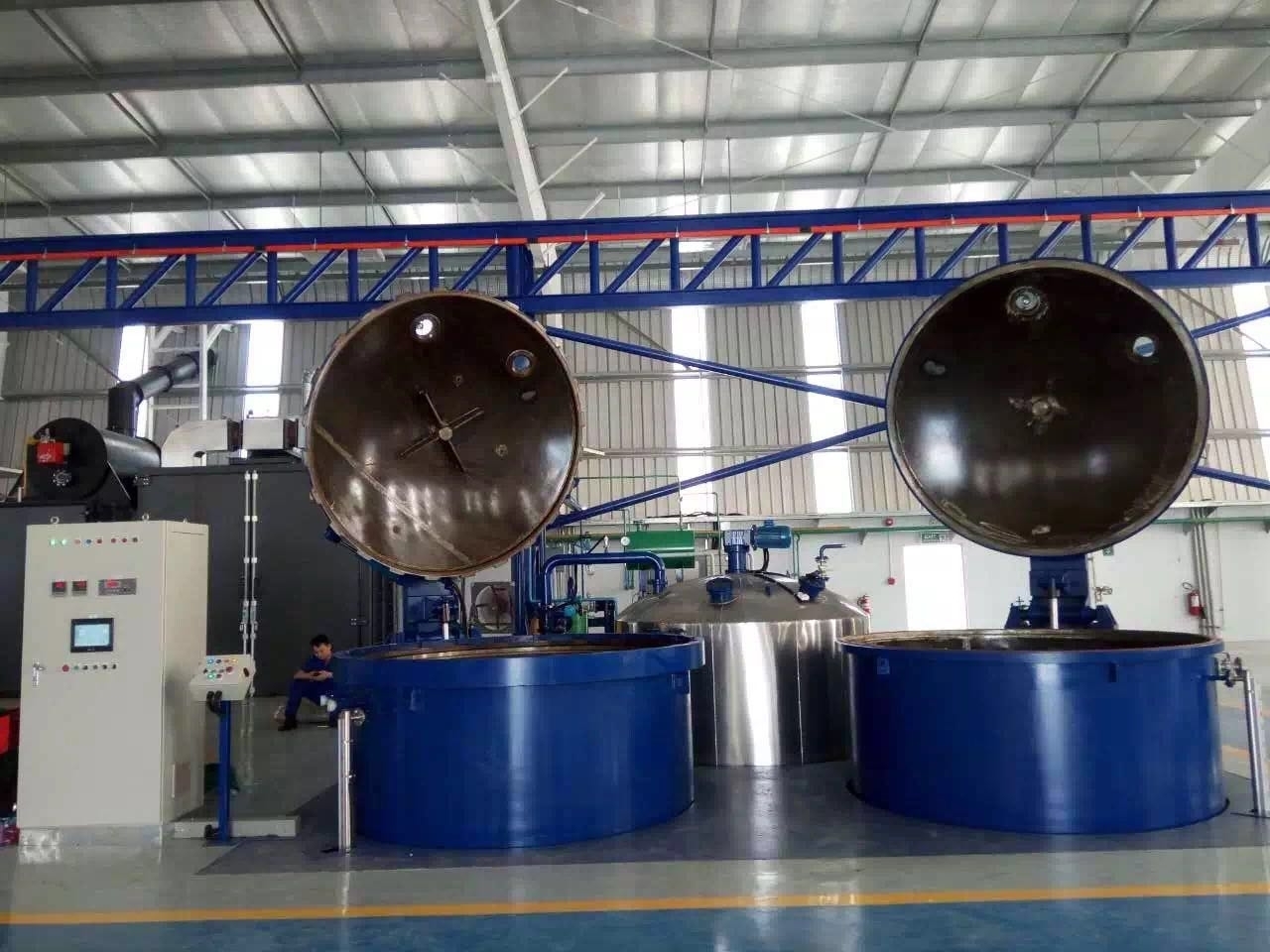


Vacuum Pressure Impregnation (VPI) Product Introduction
Vacuum Pressure Impregnation (VPI) is a key process equipment used for impregnation treatment of electrical equipment such as motors and transformers, as well as porous products such as composite materials. This device uses vacuum technology to remove air, moisture, and volatile substances from the pores of the workpiece under vacuum conditions. Then, pressure is applied to force the impregnating medium (insulation paint, resin, asphalt, etc.) to penetrate into the internal gaps of the workpiece, winding, porous products, etc., thereby achieving insulation strengthening, structural densification, or functional modification. After completion, the impregnating medium is pressed back into the storage tank, and finally the product is discharged from the tank.
Product Overview
Vacuum Pressure Impregnation (VPI) is a key process equipment used for impregnation treatment of electrical equipment such as motors and transformers, as well as porous products such as composite materials. This device uses vacuum technology to remove air, moisture, and volatile substances from the pores of the workpiece under vacuum conditions. Then, pressure is applied to force the impregnating medium (insulation paint, resin, asphalt, etc.) to penetrate into the internal gaps of the workpiece, winding, porous products, etc., thereby achieving insulation strengthening, structural densification, or functional modification. After completion, the impregnating medium is pressed back into the storage tank, and finally the product is discharged from the tank.
After VPI process treatment, the insulation performance of the product is significantly improved, the temperature rise is reduced, and the mechanical strength is enhanced. It can effectively solve the loosening phenomenon during operation, prevent insulation faults such as short circuits, and greatly improve the moisture-proof ability and service life.
Working principle
The core process of VPI technology is divided into four stages:
Stage 1: Vacuum pre-treatment. Place the workpiece to be immersed in a sealed pressure resistant container, activate the vacuum system to reduce the pressure inside the tank to the required process value (usually 100-400 Pa), and extract air, moisture, and volatile substances from the pores of the workpiece and the tank.
Stage 2: Vacuum inlet. Transport the impregnation medium from the storage tank to the impregnation tank while maintaining a vacuum state, ensuring that the impregnation solution completely submerges the workpiece. The vacuum environment enables the impregnating solution to quickly fill the surface and open pores of the workpiece.
Stage 3: Pressure infiltration. Close the vacuum system, introduce compressed air or inert gas (nitrogen) into the tank, increase the pressure to 0.4-0.6 MPa (typical value in the motor industry), and maintain the pressure for a certain period of time. The pressure gradient forces the impregnating solution to penetrate deeply into the fine gaps of the workpiece.
Stage 4: Drainage and removal. Release the pressure inside the tank, transfer the impregnation solution back to the storage tank, open the tank door to remove the workpiece, and complete one impregnation cycle.
Main technical parameters
|
Parameter item |
Parameter values |
|
Tank type |
Horizontal or vertical |
|
Quick opening format |
Tooth meshing or clamp type quick opening door structure |
|
Door opening method |
Manual, hydraulic, pneumatic, electric door opening |
|
Tank specifications |
Diameter Φ 0.5m-10.0m (customizable) |
|
|
Length 0.5-60.0m (customizable) |
|
work pressure |
0.4-0.6MPa (in the motor/transformer industry), with a maximum of 1.6MPa |
|
Operating temperature |
≤ 70 ℃ (motor/transformer insulation); ≤ 230 ℃ (refractory material impregnated with asphalt) |
|
Working vacuum degree |
100-500 Pa |
|
Empty tank leakage rate |
≤0.13 Pa·m³/s |
|
Insulation method |
external thermal insulation |
Characteristics of vacuum pressure impregnation tank
1. High impregnation quality: The synergistic effect of vacuum and pressure ensures that the impregnation medium fully penetrates all open pores and micro gaps of the workpiece, eliminating dry spots and residual bubbles.
2. Strong process adaptability: By adjusting parameters such as vacuum degree, pressure, temperature, and holding time, it can adapt to the process requirements of different viscosity impregnation media and different structural workpieces.
3. Automation control: The PLC control system realizes the full automation from vacuum pumping, liquid inlet, pressurization, pressure holding to liquid return. The process parameters can be stored and called to ensure batch consistency.
4. Safe and reliable: The impregnation tank is designed and manufactured according to pressure vessel standards, equipped with multiple safety interlocks - the tank door cannot be opened when there is pressure inside the tank, and the pressurization and vacuuming are interlocked to prevent safety accidents caused by misoperation.
5. Customized design: Tank specifications, door opening methods (manual/electric/hydraulic), and control system configuration can be flexibly customized according to customer production capacity and process requirements, supporting vertical or horizontal layouts.
System Composition
The complete VPI equipment system consists of the following functional units:
Vacuum pressure impregnation tank - core pressure vessel, providing a vacuum and pressurized environment, with a workpiece bearing platform or trolley track inside. The tank door adopts a hydraulic or electric quick opening structure, equipped with a safety interlock device to ensure that it cannot be opened until the pressure returns to zero.
Paint storage tank - stores impregnating medium and is equipped with a stirring device to maintain the uniformity of the medium. For resins that require low-temperature storage, a refrigeration system should be configured to maintain a storage temperature of 0-5 ℃.
Vacuum system - composed of a vacuum pump group, vacuum pipelines, and valves, responsible for quickly removing gas from the tank and maintaining the process vacuum degree.
Pressurization system - including compressed air storage tanks, booster pumps, and pipelines, providing a stable source of pressurized air. For occasions with high explosion-proof requirements, nitrogen pressurization can be used.
Return paint system - realizes the reciprocating transportation of impregnating solution between the paint storage tank and the impregnating tank, including paint transfer valve, return paint valve, filter and supporting pipelines.
Heating/cooling system - adjust the temperature of the impregnation medium according to process requirements, control viscosity to ensure penetration effect.
Electrical control system - using PLC+HMI architecture to achieve full process automation control, with parameter setting, real-time monitoring, fault alarm, and safety interlock functions.
Application Areas
1. Manufacturing of motors and generators: Insulation treatment of stator windings for high-voltage motors, traction motors, and explosion-proof motors is the most typical application scenario of VPI technology. After vacuum pressure impregnation, the electrical strength, thermal conductivity, and mechanical integrity of the winding insulation were significantly improved.
OLYMSPAN CAB Autoclave FAQ